Introduction
Long-term contracts have traditionally been the norm in IT outsourcing. Master Service Agreements (MSAs), multi-year commitments, and rigid renewal clauses were once seen as a way to reduce risk. Today, many companies—especially startups and growing teams—are moving in the opposite direction.
As technology needs evolve faster, businesses are actively searching for IT outsourcing firms without long-term contracts. This demand has led many to explore outsourcing software development for startups: a comprehensive guide to understand how to maintain agility during rapid growth phases.
This guide explains why companies are avoiding long-term outsourcing commitments, what flexible engagement models look like, and how to evaluate contract-free IT outsourcing partners.
Why Companies Avoid Long-Term IT Outsourcing Contracts
Long-term IT outsourcing contracts often create friction instead of stability. While they may provide predictability on paper, they can quickly become restrictive in fast-changing environments.
Companies avoid long-term contracts because they:
- Lock teams into vendors even when needs change
- Make it difficult to adjust team size or skill sets
- Delay decision-making with legal and procurement overhead
- Increase risk if performance or fit is not as expected
For startups and scale-ups, committing to multi-year agreements can be especially risky when product direction, funding, or hiring priorities shift rapidly. Companies avoid long-term contracts because they lock teams into vendors even when needs change. This shift is driven by a global business landscape marked by permanent uncertainty, where traditional fixed hiring models increasingly expose organizations to financial risk.
Benefits of Working with Contract-Free IT Outsourcing Firms
Contract-free IT outsourcing models prioritize flexibility without sacrificing quality. Instead of forcing long-term commitments upfront, these firms focus on performance, alignment, and ongoing value. This approach shifts outsourcing from a transactional relationship to a results-driven partnership, which is a key component of implementing cost-effective hiring solutions for startups that need to maximize their runway.
Key benefits include:
Lower hiring risk
Companies can validate technical quality and team fit before making long-term decisions. This approach aligns with the digital business agility imperative, which prioritizes hyperawareness and fast execution over rigid structural commitments."
Faster time to start
Without lengthy contract negotiations, teams can onboard engineers and start work quickly.
Greater control
Businesses retain the ability to scale teams up or down based on real needs, not contractual obligations.
Better alignment and accountability
When vendors are not protected by long-term lock-ins, performance and retention matter more.
This approach shifts outsourcing from a transactional relationship to a results-driven partnership.
Common Flexible Engagement Models in IT Outsourcing
Contract-free IT outsourcing does not mean unstructured or informal. Most firms offer clear engagement models that provide flexibility while maintaining operational clarity.
Staff Augmentation
Engineers work as embedded members of the internal team. This model is particularly effective when integrated with agile contract frameworks that prioritize iterative value delivery and continuous feedback loops.
Nearshore IT Outsourcing
Teams are sourced from nearby regions, enabling time zone alignment and smoother collaboration without committing to long-term agreements.
Employer of Record (EOR)
Some firms manage payroll, compliance, and local employment while allowing companies to retain operational control. This is particularly useful for companies that want to reduce hiring costs with remote staff without dealing with the administrative burden of international entities.
Each model offers different levels of control, responsibility, and flexibility, making them suitable for different growth stages.
IT Outsourcing Firms Without Long-Term Contracts
1. Teilur Talent
Flexibility model: Month-to-month nearshore staff augmentation with no lock-in.
Teilur Talent is widely recognized for its no-lock-in approach to IT outsourcing. Companies can hire senior engineers from Latin America on a month-to-month basis, without upfront deposits or mandatory annual contracts.
In addition to technical vetting, Teilur places strong emphasis on cultural fit and communication style, ensuring engineers can integrate smoothly into existing teams and workflows. Candidates are evaluated not only for seniority and hands-on experience, but also for collaboration habits and alignment with the client’s working culture.
Why it works for startups:
Instead of relying on legal commitments, Teilur focuses on long-term collaboration driven by performance and team fit. Thanks to its focused vetting process, companies typically receive qualified candidates within approximately 5 days, allowing teams to move quickly without sacrificing quality. Teilur allows startups to bring engineers in-house as they grow. This is part of our commitment to being one of the best nearshore software development companies for U.S. businesses, focusing on long-term stability rather than contractual lock-ins
Its model also includes flexible termination clauses and does not charge transfer or buyout fees after a defined period, allowing startups to bring engineers in-house as they grow.
2. Mismo
Flexibility model: Managed staff augmentation with monthly contracts and contract-to-hire options.
Mismo specializes in embedded staff augmentation teams operating under short-term agreements. Its contract-to-hire option allows companies to evaluate engineers in real working conditions before committing long term.
Why it works for startups:
With onboarding timelines of approximately 2–4 weeks, Mismo enables startups to scale engineering capacity in line with funding rounds and product milestones, without penalties for resizing teams.
3. Kanda Software
Flexibility model: Time & Materials (T&M) and agile project-based engagement.
Kanda Software is known for its agile delivery model, where companies pay only for hours worked rather than committing to fixed budgets or long-term contracts.
Why it works for startups:
This model is well suited for products in active development, where scope and priorities change frequently. Startups benefit from the ability to adapt sprint by sprint, without aggressive cancellation fees or rigid contractual structures.
4. nCube
Flexibility model: Rapid-scale staff augmentation with short-term agreements.
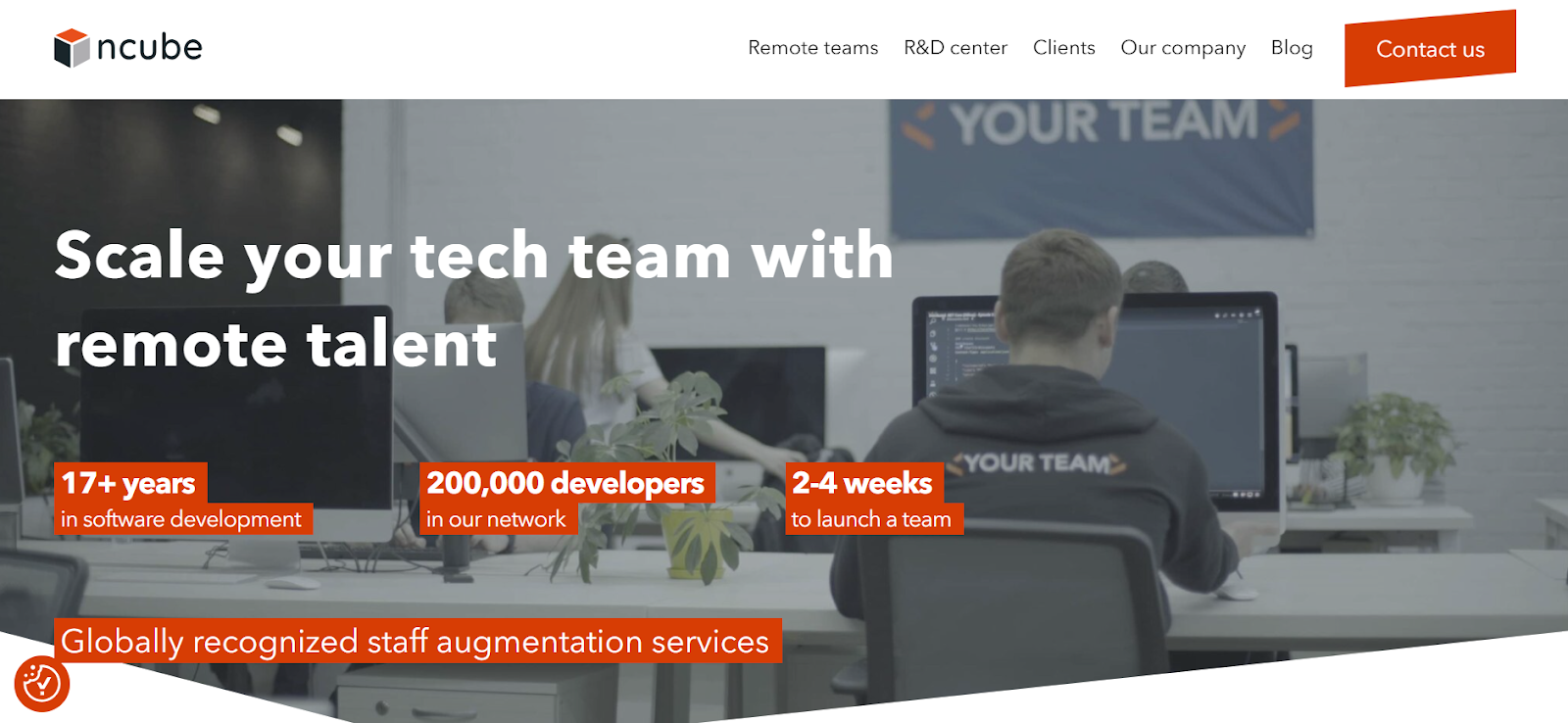
nCube offers staff augmentation designed for fast scaling, allowing companies to add or remove developers within one to two weeks based on immediate technical needs.
Why it works for startups:
By eliminating recruitment overhead and offering transparent pricing, nCube gives startups operational control while maintaining the flexibility required during early growth stages.
5. SCAND
Flexibility model: Dedicated teams with flexible commitment levels.
SCAND supports both long-term engagements and smaller pilot projects. For startups, its strength lies in the ability to start with limited-scope pilots before expanding the relationship.
Why it works for startups:
SCAND allows smooth transitions from MVP development to scaling phases, enabling startups to adjust commitment levels as product and business needs evolve.
Pricing Models and Transparency in Staff Augmentation
Pricing is one of the most overlooked—but most important—elements of staff augmentation.
Some providers use blended hourly rates that obscure how much the engineer earns versus the agency’s margin. Others rely on long-term contracts or upfront fees that increase risk for companies.
Transparent pricing models provide:
- Clear visibility into cost allocation
- Fair compensation for engineers
- Better retention and engagement
- More predictable budgeting for companies
As hiring teams become more sophisticated, transparency is increasingly viewed as a competitive differentiator rather than a nice-to-have. Transparent pricing models provide visibility into cost allocation. This openness is a key driver for higher levels of trust between the employee and the company, which significantly improves retention and motivation. More predictable budgeting for companies is just the start; transparency also plays a critical role in retaining remote tech talent: proven strategies for 2025, as engineers who feel fairly compensated are less likely to churn.
FAQ
Is IT outsourcing without a long-term contract reliable?
Yes. Many firms operate on short-term or rolling agreements while maintaining high service standards and accountability.
Do contract-free outsourcing firms still offer senior talent?
Absolutely. Flexibility does not imply lower quality. Many providers focus on senior, full-time professionals, helping companies in retaining remote tech talent: proven strategies for 2025 by offering stable but flexible work environments.
Is this model suitable for enterprise companies?
Many enterprises now adopt flexible models for innovation teams, often requiring standardized information security management like ISO/IEC 27001 to ensure that flexible vendors meet the same security benchmarks as traditional ones.
Conclusion
The shift away from long-term IT outsourcing contracts reflects how modern companies operate: faster, leaner, and more adaptable. Flexibility is no longer a compromise—it’s a strategic advantage.
By working with IT outsourcing firms that don’t require long-term commitments, companies can reduce risk, accelerate hiring, and maintain control as their needs evolve. In the next section, we’ll explore specific IT outsourcing firms that offer flexible, contract-free engagement models and how they compare. The key is selecting a model that supports growth rather than limiting it. For a practical roadmap on how to start this process, check out the ultimate nearshoring and outsourcing cybersecurity checklist, which provides essential steps for vetting flexible partners.
Looking to build your remote team in Latin America without hidden fees or inflated markups?
At Teilur Talent, our Transparent Rate Pricing model ensures you know exactly where every dollar goes — with at least 80% of the rate going directly to the talent. This means fair pay, full visibility, and stronger long-term partnerships that drive real growth. We connect you with vetted, English-proficient professionals in tech, marketing and business ops who are ready to scale your operations seamlessly and cost-effectively.
If you’re ready to experience a smarter way to hire, click here to schedule a free consultation with us.