Introduction
For small businesses, cybersecurity is no longer optional—it’s a requirement. As cyberattacks become more frequent and sophisticated, many small and mid-sized companies find themselves exposed without the internal resources to defend against modern threats.
Hiring a full in-house security team is often unrealistic due to cost, availability, and operational complexity. That’s why more small businesses are turning to cybersecurity outsourcing companies to protect their systems, data, and customers—without overextending budgets or internal teams.
This guide explains why outsourcing cybersecurity makes sense for small businesses, what services are commonly outsourced, and how to evaluate the right partner before making a decision.
Why Small Businesses Outsource Cybersecurity
Small businesses are increasingly targeted by cybercriminals because they often lack mature security infrastructure. In fact, recent data confirms that small businesses now account for 43% of all cyberattacks annually, with ransomware and phishing being disproportionately used against organizations with fewer than 1,000 employees. At the same time, regulatory pressure and customer expectations around data protection continue to rise.
Outsourcing cybersecurity allows small businesses to:
- Access senior-level security expertise without full-time salaries
- Reduce the risk of breaches, ransomware, and downtime
- Stay compliant with industry standards and regulations
- Scale security coverage as the business grows
Instead of reacting to incidents, outsourced services help companies move toward proactive risk management. However, proximity is key; there are strategic reasons why you should not outsource cybersecurity outside of your time zone, especially when real-time incident response is required."
What to Look for in a Cybersecurity Outsourcing Partner
Not all cybersecurity outsourcing companies are built for small businesses. Choosing the wrong provider can result in unnecessary costs, poor communication, or misaligned priorities.
Key factors to evaluate include:
Relevant experience with small businesses
Providers should understand the budget constraints, risk profiles, and operational realities of smaller organizations—not just enterprises.
Clear scope of services
You should know exactly what is included: monitoring, incident response, or advisory services. To ensure you don't miss any critical evaluation criteria, we recommend following the ultimate nearshoring and outsourcing cybersecurity checklist during your vetting process.
Pricing transparency
Opaque pricing models can quickly become a problem. Small businesses benefit from clear, predictable pricing without hidden fees.
Communication and responsiveness
Security issues require fast action. Your provider should offer clear escalation paths and consistent reporting.
Scalability The right partner should support your business as it grows, without forcing a complete restructuring of your security stack.
Common Cybersecurity Roles Small Businesses Outsource
Cybersecurity outsourcing for small businesses is not about delegating security to a black-box provider. In most cases, it means augmenting internal teams with specialized cybersecurity talent that can operate existing tools, processes, and infrastructure.
Small businesses commonly outsource cybersecurity roles, such as:
Security monitoring and threat detection
Hiring a dedicated security analyst or SOC-level professional who continuously monitors alerts, logs, and dashboards to identify suspicious activity before it escalates into a breach.
Incident response and remediation
Embedding experienced cybersecurity engineers who can design incident response plans and take action when security events occur, reducing downtime and business impact.
Vulnerability assessments and penetration testing
Bringing in senior security engineers or DevSecOps specialists to identify weaknesses in systems, applications, and cloud infrastructure before attackers do.
Compliance and security audits
Support for frameworks like SO/IEC 27001 or SOC 2 compliance is essential for small businesses looking to build trust with larger enterprise clients and ensure international data protection standards.
Security awareness training
Working with security professionals who educate internal teams, improve security hygiene, and reduce human-related risks such as phishing or credential misuse.
By outsourcing cybersecurity talent, small businesses gain hands-on expertise and enterprise-grade capabilities—without the cost or rigidity of building a full internal security department.
Cybersecurity outsourcing is not limited to one function. Small businesses often rely on external providers for a combination of services, such as:
- Security monitoring and threat detection
Continuous monitoring to identify suspicious activity before it becomes a breach. - Incident response and remediation
Rapid response plans to contain and resolve security incidents. - Vulnerability assessments and penetration testing
Identifying weaknesses before attackers do. - Compliance and security audits
Support for frameworks like SO/IEC 27001 or SOC 2 compliance is essential for small businesses looking to build trust with larger enterprise clients and ensure international data protection standards. - Security awareness training
Educating employees to reduce human-related security risks.
By outsourcing these functions, small businesses gain enterprise-grade protection without enterprise-level overhead.
Best Cybersecurity Outsourcing Companies for Small Businesses
Choosing the right partner is essential. Many firms are now specializing in software staff augmentation as a way to provide more integrated and dedicated security support compared to traditional ticket-based outsourcing.
1. Teilur Talent (Cybersecurity Staff Augmentation)
Focus: Dedicated cybersecurity professionals embedded directly into the client’s team.
Teilur Talent offers a staff augmentation model designed for small businesses that already use security tools but lack senior expertise to operate them effectively. Instead of outsourcing security to a black-box provider, companies work with full-time cybersecurity professionals—such as Security Analysts or DevSecOps Engineers—who integrate directly into daily operations and internal workflows.
Beyond technical skills, Teilur places strong emphasis on talent quality and cultural fit. Each cybersecurity professional is vetted not only for hands-on experience and seniority, but also for communication style, collaboration, and alignment with the client’s working culture. This ensures engineers can operate autonomously while fitting seamlessly into existing teams.
Thanks to this focused vetting process, companies typically receive qualified candidates within 5 days, allowing small businesses to move fast without sacrificing quality or team cohesion.
Why it works for small businesses:
Unlike agencies that apply 40–50% margins, Teilur Talent uses a transparent pricing model that allows small businesses to access senior talent without inflated costs. If you are specifically looking for regional leaders, you can explore the top 10 outsourcing & nearshoring agencies for hiring Cybersecurity Engineers in Colombia. This makes it ideal for companies that need expert “hands-on” support, leveraging global cybersecurity workforce trends that favor specialized staff augmentation over generalist outsourcing.
Best for:
Small businesses that want control, transparency, fast hiring, and senior cybersecurity expertise embedded in their team—without cultural friction or long onboarding cycles.

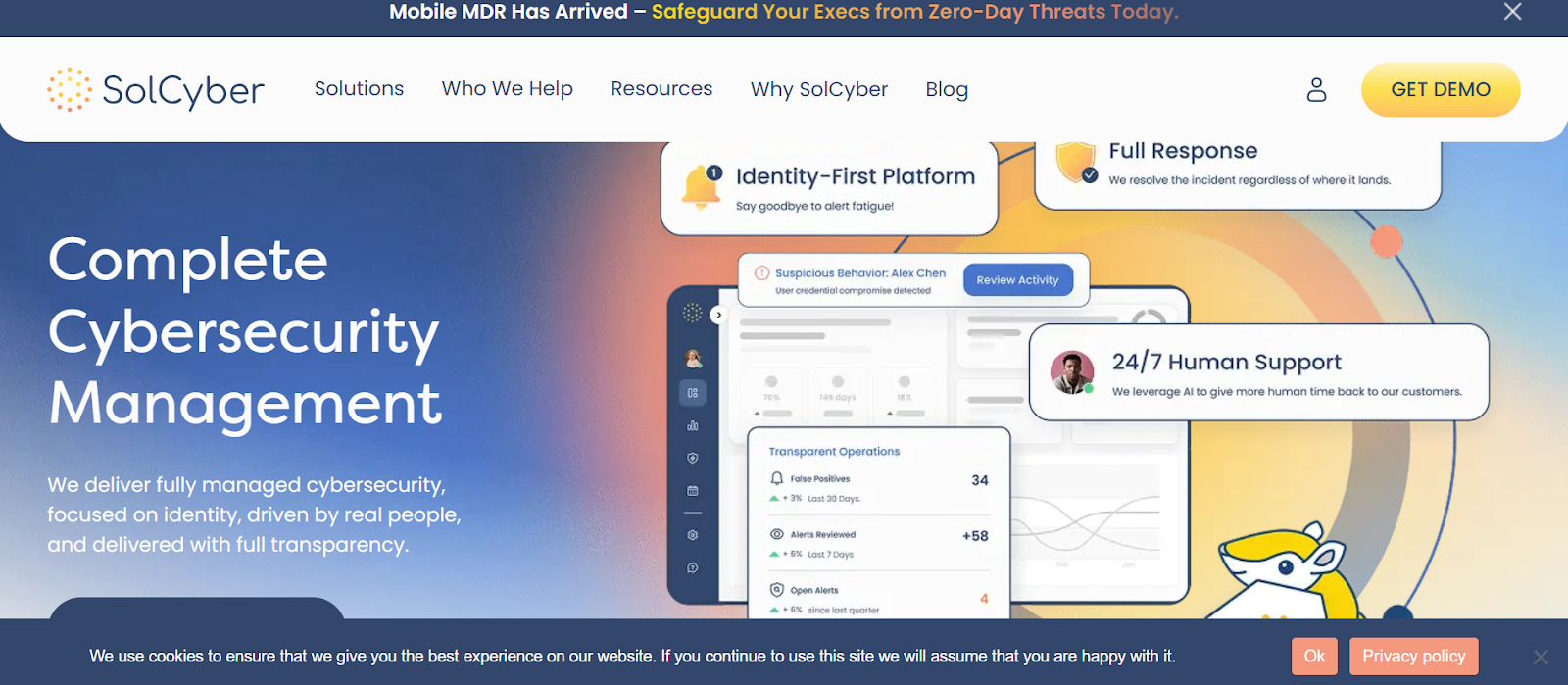
2. SolCyber
Focus: Modern all-in-one Managed Security Service Provider (MSSP).
SolCyber provides a simplified cybersecurity offering designed for companies that don’t know where to start. Their “Foundational Coverage” package bundles essential security services into a single subscription.
Why it works for small businesses:
SolCyber removes complexity by offering a per-user monthly model, making it easier for SMBs to budget and deploy baseline security coverage without building internal expertise.
Best for:
Small and mid-sized businesses looking for a turnkey cybersecurity solution with minimal internal involvement.
3. Rapid7 (Managed Services for SMBs)
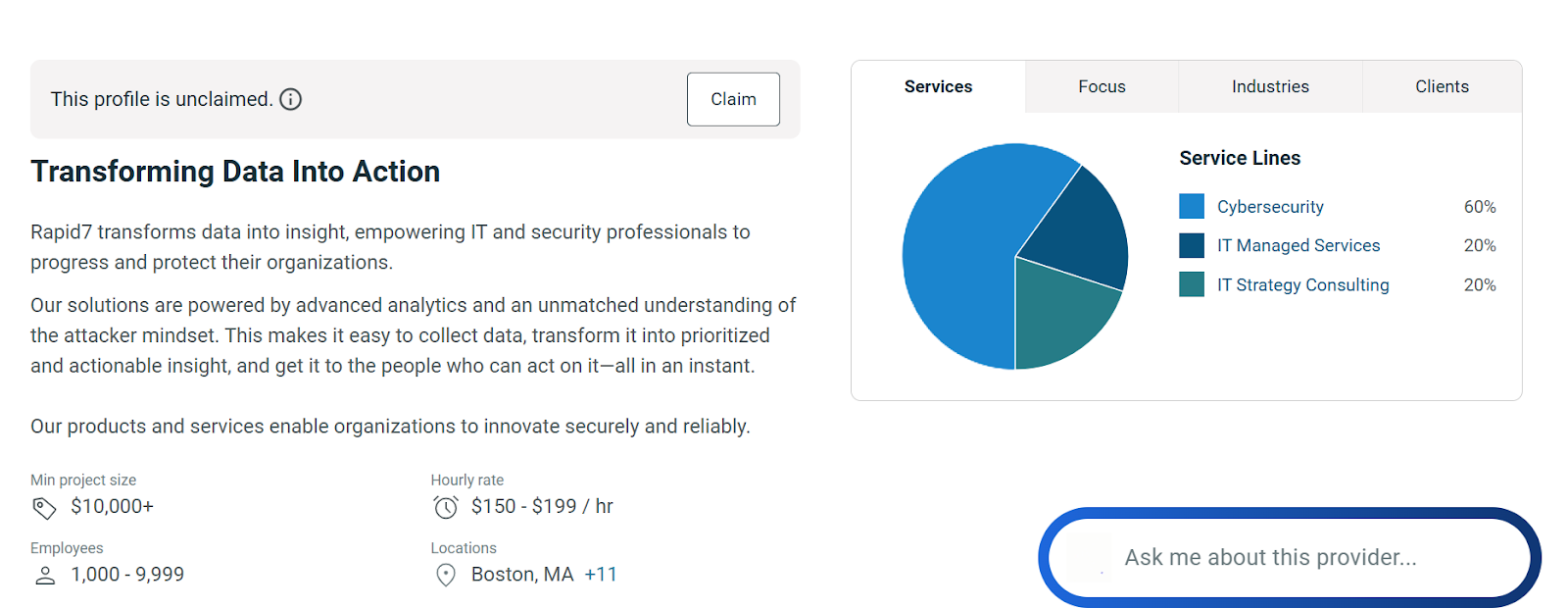
Focus: Managed Detection and Response (MDR) and vulnerability management.
Rapid7’s InsightIDR platform includes managed services tailored for small and mid-sized businesses that require 24/7 monitoring but cannot afford to operate their own Security Operations Center (SOC).
Why it works for small businesses:
Rapid7 offers enterprise-grade tooling with packages adapted for SMB budgets, providing continuous threat detection and response without full internal teams.
Best for:
Businesses that need constant monitoring and vulnerability visibility with limited in-house security staff.
4. Arctic Wolf
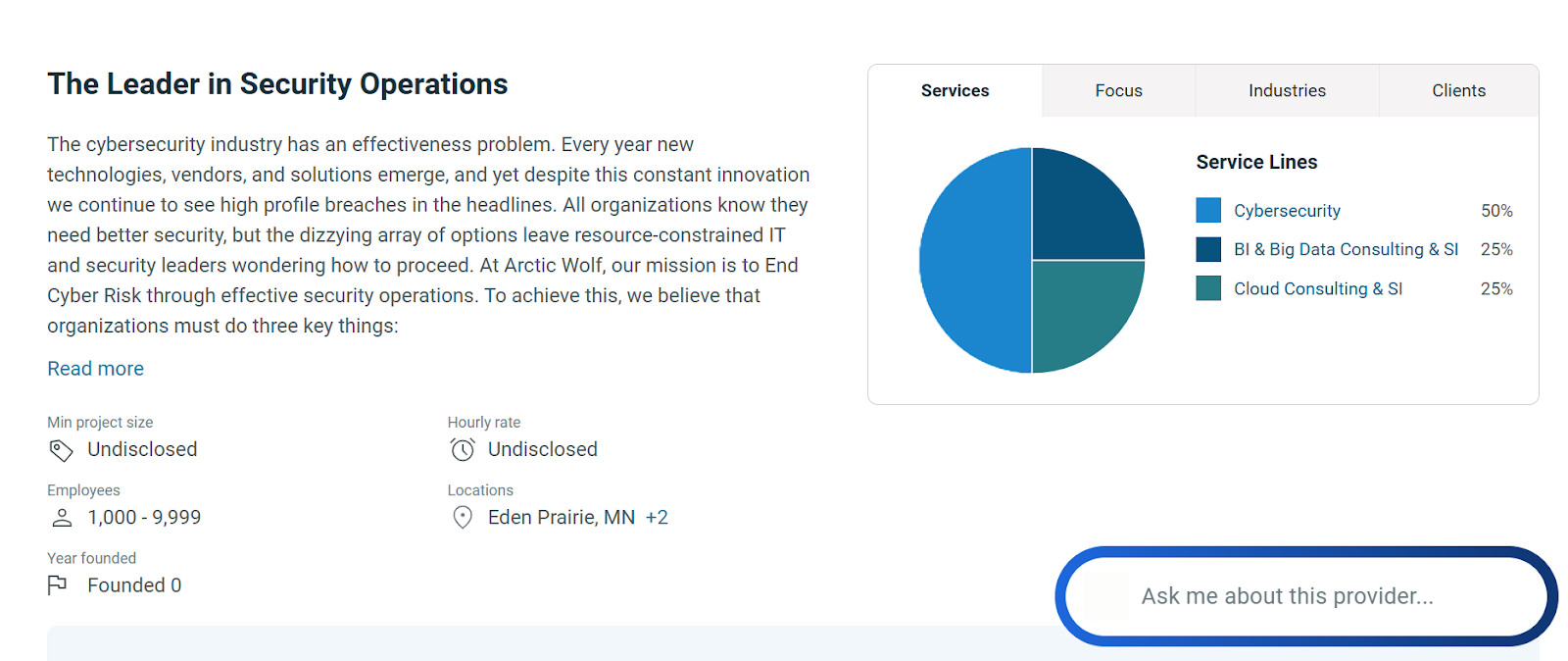
Focus: Security Operations as a Service.
Arctic Wolf specializes in acting as an extension of internal IT teams, managing security operations while filtering out unnecessary alerts.
Why it works for small businesses:
Alert fatigue is a major challenge for small IT teams. Arctic Wolf focuses on delivering only actionable threats, allowing companies to respond effectively without being overwhelmed.
Best for:
Small businesses that want a virtual security team to monitor, analyze, and escalate real threats.
Pricing Models and Transparency in Cybersecurity Outsourcing
Pricing is often one of the biggest concerns for small businesses considering outsourced cybersecurity services.
Common pricing models include:
- Monthly managed service fees
A predictable monthly cost covering monitoring and support. - Per-project pricing
Used for audits, assessments, or one-time security initiatives. - Staff augmentation models
Dedicated security professionals working as part of your team.
For small businesses, transparency matters more than complexity. Clear pricing helps founders understand what they’re paying for, allowing them to align security investments with established risk management frameworks that prioritize business continuity.
FAQ
Is cybersecurity outsourcing safe for small businesses?
Yes—when done correctly. Reputable cybersecurity outsourcing companies follow strict security standards and often provide better protection than understaffed internal teams.
How much does outsourced cybersecurity cost?
Costs vary depending on scope, but outsourcing is typically far more affordable than local hiring. Small businesses often find that hiring remote workers can stop you from losing money by preventing expensive breaches while keeping overhead low
Do small businesses really need cybersecurity services?Absolutely. The financial impact of a breach can be devastating, often exceeding the average cost of a data breach for small businesses, which has reached record highs in 2026."
Conclusion
Cybersecurity outsourcing gives small businesses access to expertise, tools, and processes that would otherwise be out of reach. Rather than attempting to build security capabilities from scratch, outsourcing allows companies to protect their operations while staying focused on growth.
The key is choosing a cybersecurity outsourcing partner that understands small business needs, offers transparent pricing, and provides scalable protection. In the next section, we’ll explore the best cybersecurity outsourcing companies for small businesses and how they compare.
Looking to build your remote team in Latin America without hidden fees or inflated markups?
At Teilur Talent, our Transparent Rate Pricing model ensures you know exactly where every dollar goes — with at least 80% of the rate going directly to the talent. This means fair pay, full visibility, and stronger long-term partnerships that drive real growth. We connect you with vetted, English-proficient professionals in tech, marketing and business ops who are ready to scale your operations seamlessly and cost-effectively.
If you’re ready to experience a smarter way to hire, click here to schedule a free consultation with us.