For startups, building a strong software engineering team is one of the most critical—and challenging—steps toward growth. Hiring in-house engineers takes time, requires long-term commitments, and often demands budgets that early-stage and scaling startups simply don’t have.
As a result, many startups turn to software engineering outsourcing to move faster, reduce risk, and access experienced talent without slowing down product development. When done right, outsourcing allows startups to focus on execution while maintaining flexibility, especially when following a strategic approach to outsourcing software development for startups that aligns with high-growth goals.
Why Startups Outsource Software Engineering
Startups operate under constant pressure to ship, iterate, and validate ideas quickly. Outsourcing software engineering helps address several common challenges:
Speed to Market
Outsourcing allows startups to bypass lengthy hiring cycles and onboard engineers quickly, reducing time-to-product and enabling faster iteration.
Cost Predictability
Instead of committing to full-time local hires, startups can work with predictable monthly costs. For many founders, this is the cornerstone of implementing cost-effective hiring solutions for startups that allow for a longer runway.
Access to Senior Talent Early
Outsourcing gives startups access to senior software engineers from day one—something that is often difficult or expensive to achieve through traditional hiring. something that is often difficult or expensive to achieve through traditional hiring, especially as the global shortage of specialized tech talent continues to drive competition for senior roles in domestic markets.
Operational Simplicity
Many outsourcing partners handle contracts, payroll, and compliance, allowing founders and engineering leaders to stay focused on building the product.
What Startups Should Look for in an Outsourcing Partner
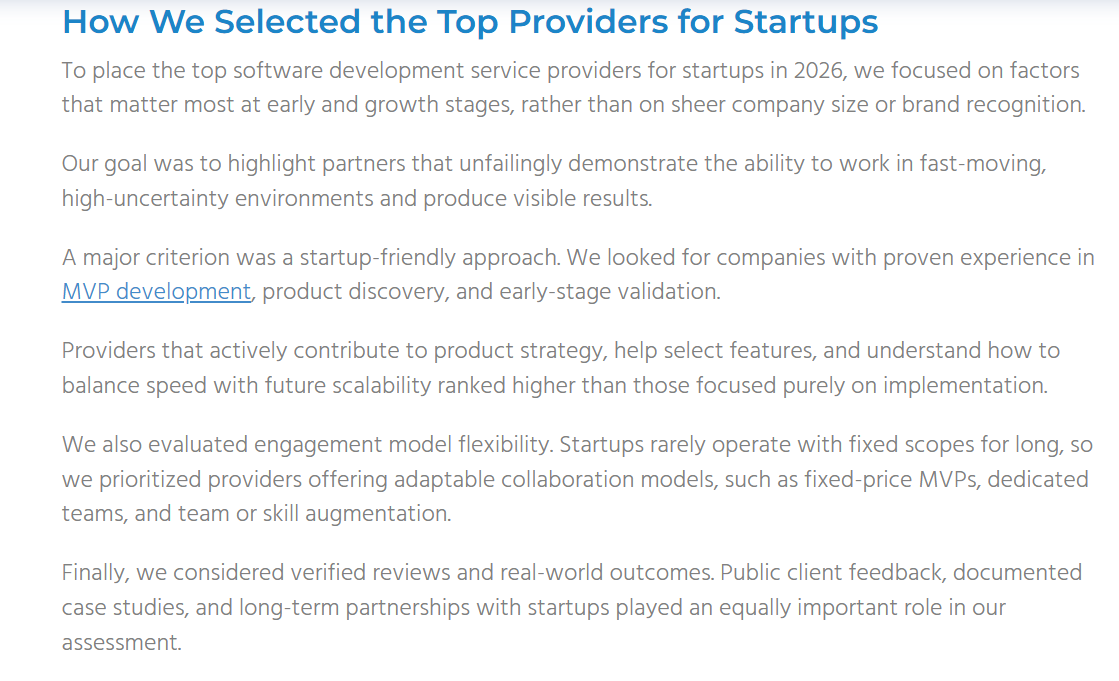
Not all outsourcing companies are built for startups. Choosing the wrong partner can lead to delays, misalignment, and wasted resources. Startups should prioritize the following when evaluating outsourcing firms:
Flexibility
Avoid long-term lock-ins, rigid contracts, or upfront fees. Startups need the ability to scale teams up or down as the business evolves.
Transparent Pricing
Clear pricing structures help startups budget accurately and avoid surprises. At Teilur, we champion this through what is Transparent Rate Pricing?, ensuring that the majority of the investment goes directly to the developer.
Startup Experience
Partners that regularly work with startups understand fast-paced environments, evolving requirements, and the importance of ownership and accountability.
Nearshore Advantage
Nearshore outsourcing—especially in Latin America—offers strong time zone alignment with U.S. startups, enabling real-time collaboration and faster feedback loops.
Best Outsourcing Companies for Startups (Software Engineering)
1. Teilur Talent
Best for: Startups that want senior engineers fast, with full transparency
Why it’s ideal for startups
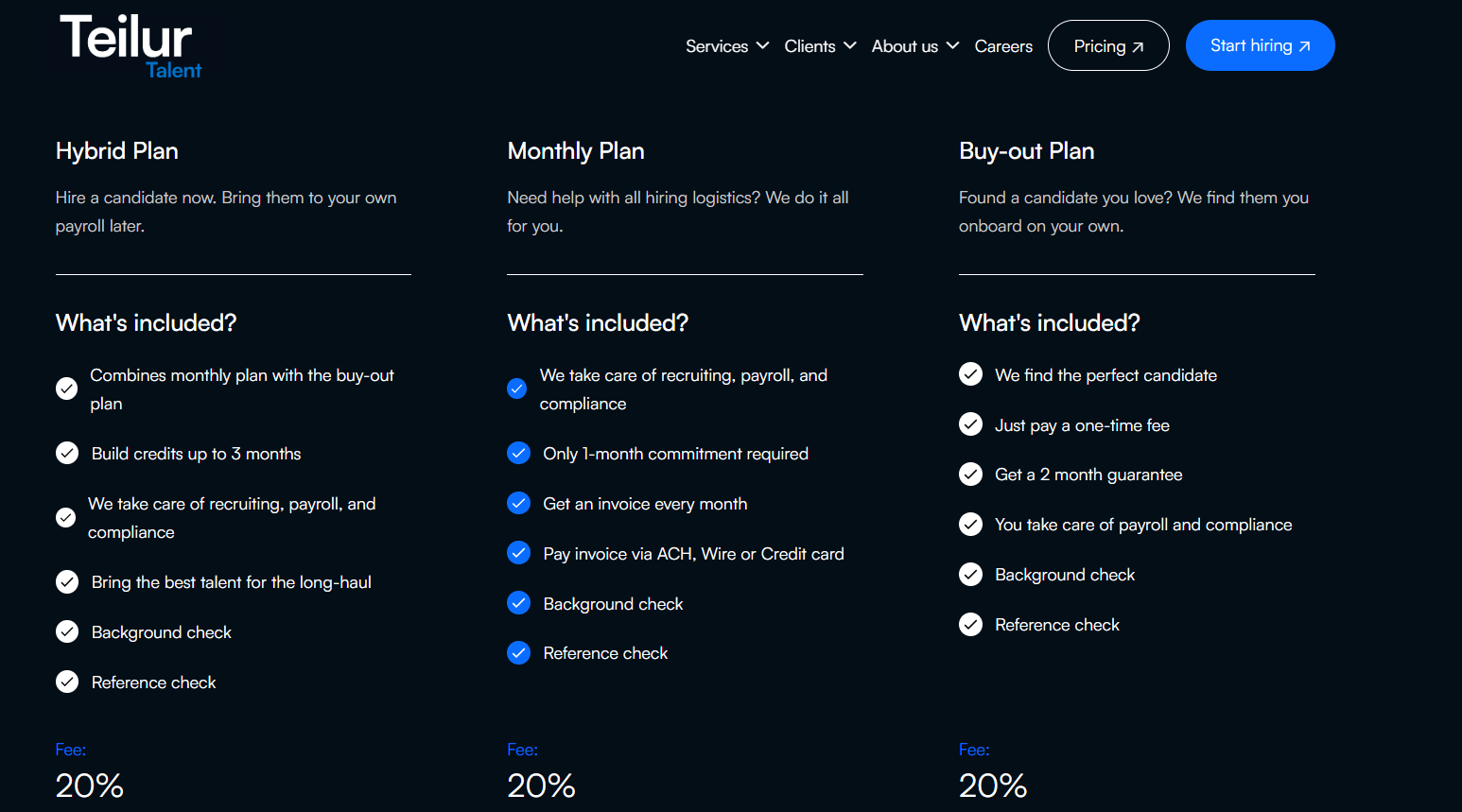
Teilur Talent is a nearshore staffing company focused on helping startups build engineering teams in Latin America without long-term lock-ins or opaque pricing. Unlike traditional outsourcing firms, Teilur works with full-time, senior engineers who integrate directly into internal teams.
A key advantage for startups is speed and fit: Teilur typically presents pre-vetted candidates within 5 days, ensuring both technical excellence and cultural alignment from the first interview.
Key strengths
- Transparent pricing model with no hidden fees
- Senior-only, full-time engineers from LATAM
- No upfront fees or long-term contracts
- Strong experience working with U.S. startups
- Optional buyout plan for direct hiring
2. 10Pines
Best for: Product-driven startups that value craftsmanship
Why it’s ideal for startups
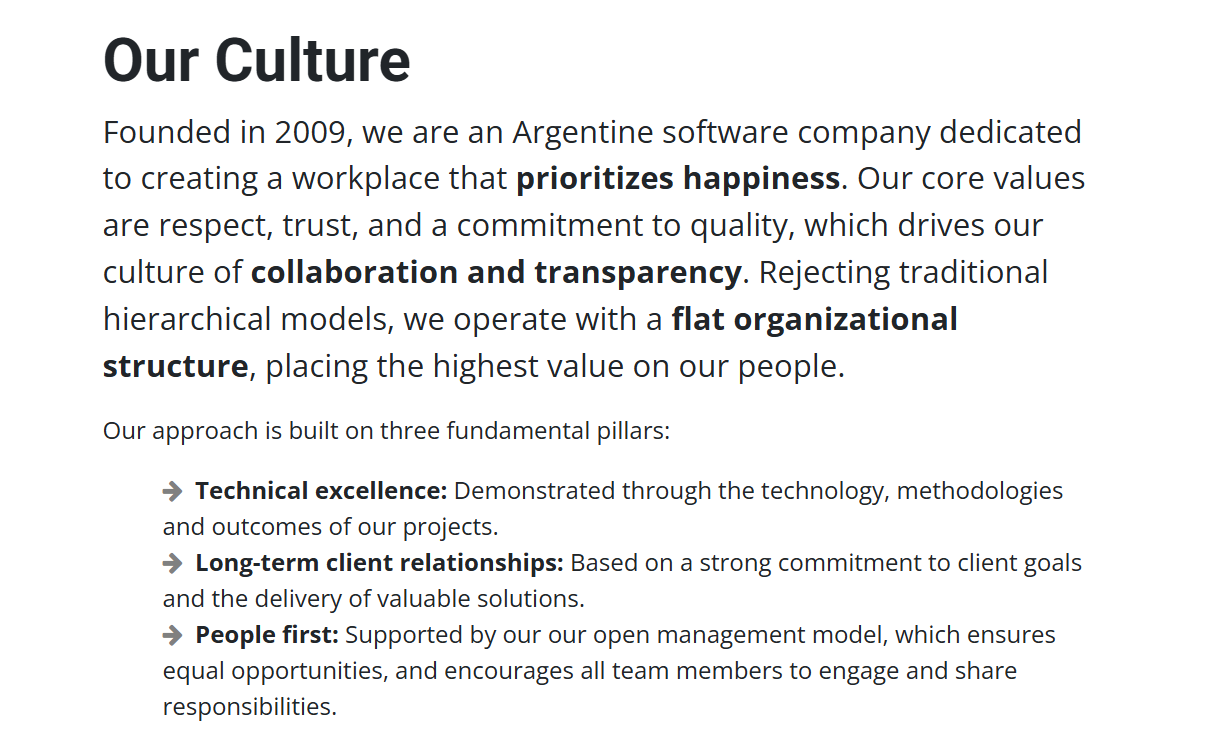
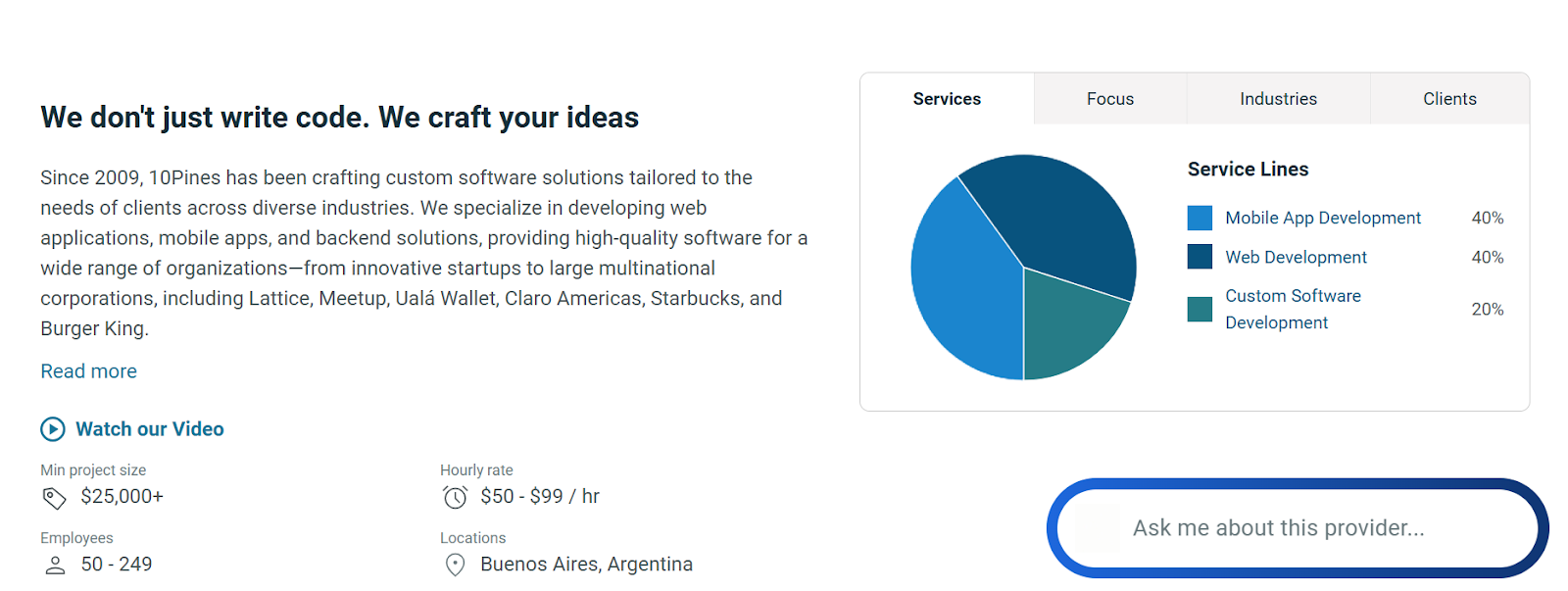
10Pines is known for operating as a Teal organization, emphasizing self-management, transparency, and trust. Their strong focus on Software Craftsmanship makes them an excellent partner for startups that want more than just code—they act as product partners.
They actively challenge assumptions, helping founders avoid overbuilding and focus only on features that create real value, which is critical for capital efficiency in early stages.
Key strengths
- Product partnership mindset
- High engineering standards
- Strong alignment with startup values
- Ideal for long-term, quality-focused builds
3. SCAND
Best for: Startups building MVPs and proofs of concept
Why it’s ideal for startups
SCAND specializes in MVP and PoC development, making them a solid option for startups validating ideas or launching early versions of their product. Their approach combines engineering with product thinking, supporting startups from ideation to long-term maintenance.
They are particularly well suited for founders who need structure and guidance during early technical decision-making.
Key strengths
- Strong MVP and PoC experience
- Product-oriented development approach
- Support from early idea to scaling
- Suitable for early-stage startups
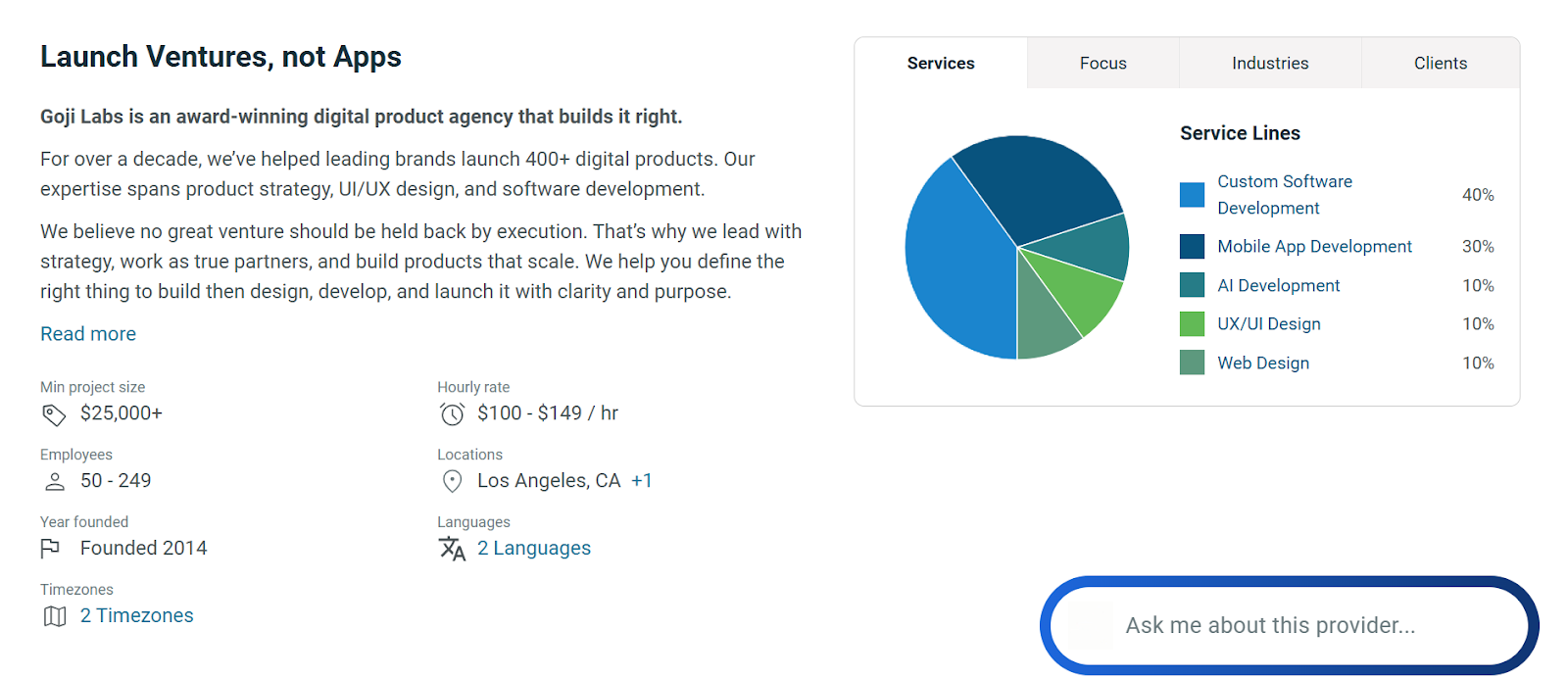
4. Goji Labs
Best for: Startups prioritizing UX and product strategy
Why it’s ideal for startups
Goji Labs places product design and strategy before code. This makes them an excellent choice for startups that need to define user experience and validate product-market fit before committing significant capital to full-scale development.
They are particularly strong for non-technical founders or teams where UX and product-market fit are still being defined.
Key strengths
- Strong UX and product strategy focus
- Ideal for early product definition
- Design-led development approach
- Good fit for innovation-driven startups
5. Mismo
Best for: Startups needing embedded LATAM engineers
Why it’s ideal for startups
Mismo specializes in staff augmentation, embedding senior LATAM engineers directly into U.S. startup teams. Their engineers work during U.S. business hours and operate as true extensions of internal teams.
This model works well for startups that already have technical leadership in place and are exploring software staff augmentation as the way to optimize their workforce quickly.
Key strengths
- Senior LATAM engineers
- Engineers embedded in U.S. working hours
- Strong staff augmentation model
- Good fit for scaling existing teams
Nearshore vs Traditional Outsourcing for Startups
Choosing between nearshore and traditional offshore outsourcing can significantly impact a startup’s execution speed.
Nearshore Outsourcing
Nearshore teams operate in similar time zones, making daily collaboration, standups, and quick decision-making much easier. This model is often better suited for agile product development, adhering to the standards for high-velocity software delivery that prioritize human interaction over rigid documentation. For a deeper dive into why this regional alignment works, consult our nearshore software development: the complete guide.
This model is often better suited for agile product development, adhering to the standards for high-velocity software delivery that prioritize human interaction over rigid documentation.
Traditional Offshore Outsourcing
Offshore teams may offer lower hourly rates but often introduce delays due to time zone differences, communication barriers, and slower iteration cycles—factors that can be costly for startups.
For startups focused on speed and product-market fit, nearshore outsourcing tends to deliver better long-term outcomes.
Why Startup-Focused Outsourcing Models Perform Better
Outsourcing models designed specifically for startups go beyond short-term project delivery. They emphasize:
- Embedded engineers who work as part of the internal team
- Long-term collaboration rather than one-off projects
- Retention and knowledge continuity, reducing churn and onboarding costs
- Aligned incentives, where both sides benefit from product success
These models help startups build momentum while maintaining control over product direction and technical decisions.
FAQ
Is outsourcing software engineering a good option for early-stage startups?
Yes. Outsourcing allows early-stage startups to access senior talent, move faster, and control costs while maintaining compliance with international data security frameworks like SOC2 and ISO 27001, which are standard for top-tier partners.
Should startups choose nearshore or offshore outsourcing?
Nearshore outsourcing is often better for startups due to time zone alignment, faster communication, and easier collaboration.
How much does software engineering outsourcing typically cost for startups?
Costs vary by region, seniority, and engagement model, but nearshore outsourcing generally offers a strong balance between affordability and quality.
Conclusion
Outsourcing software engineering can be a powerful growth lever for startups—when done with the right partner and model. Speed, flexibility, transparency, and collaboration matter far more than finding the lowest hourly rate.
Startups that choose outsourcing partners aligned with their pace and long-term vision are better positioned to build stable products, iterate quickly, and scale with confidence. The key is selecting a model that supports growth rather than limiting it.
Looking to build your remote team in Latin America without hidden fees or inflated markups?
At Teilur Talent, our Transparent Rate Pricing model ensures you know exactly where every dollar goes — with at least 80% of the rate going directly to the talent. This means fair pay, full visibility, and stronger long-term partnerships that drive real growth. We connect you with vetted, English-proficient professionals in tech, marketing and business ops who are ready to scale your operations seamlessly and cost-effectively.
If you’re ready to experience a smarter way to hire, click here to schedule a free consultation with us.