If you're a hiring manager, decision maker, or recruiter for a U.S. tech company, finding the right data engineers is probably one of your biggest challenges. Between sky-high salaries and intense local competition, filling these roles internally can feel overwhelming. With endless options and complex models, it's easy to get lost. Don’t worry – we’ve got you covered.
In this article, we’ll explore the pros and cons of outsourcing data engineers from two of the top nearshoring hubs: Mexico and Colombia. Whether growing a startup or managing an enterprise-level IT team, understand the markets to choose the most suitable one for your company's needs.
Outsource Data Engineers: Why It Matters
Outsourcing isn’t just about cutting costs—it’s about unlocking opportunities, accessing specialized talent, and staying competitive in a tech-driven world. In the realm of data engineering, outsourcing can be a game-changer.
Data engineers are responsible for building and maintaining the systems that collect, store, and analyze data. Their work ensures that data scientists, analysts, and decision-makers can access accurate and reliable information.
Key responsibilities include:
- Designing and optimizing data pipelines that move massive amounts of information between systems.
- Implementing ETL processes (Extract, Transform, Load) to clean and organize raw data.
- Creating data models to support analytics and machine learning algorithms.
- Managing and scaling databases to handle growing user demands.
- Ensuring data security and compliance with international regulations.
Think of data engineers as the architects and builders of your company’s data infrastructure. Without them, your data is like a goldmine buried deep underground—valuable but inaccessible.
Learn more about Hiring the Best Data Engineers in Latin America.
Mexico vs. Colombia: A Comparison for Outsourcing Data Engineers
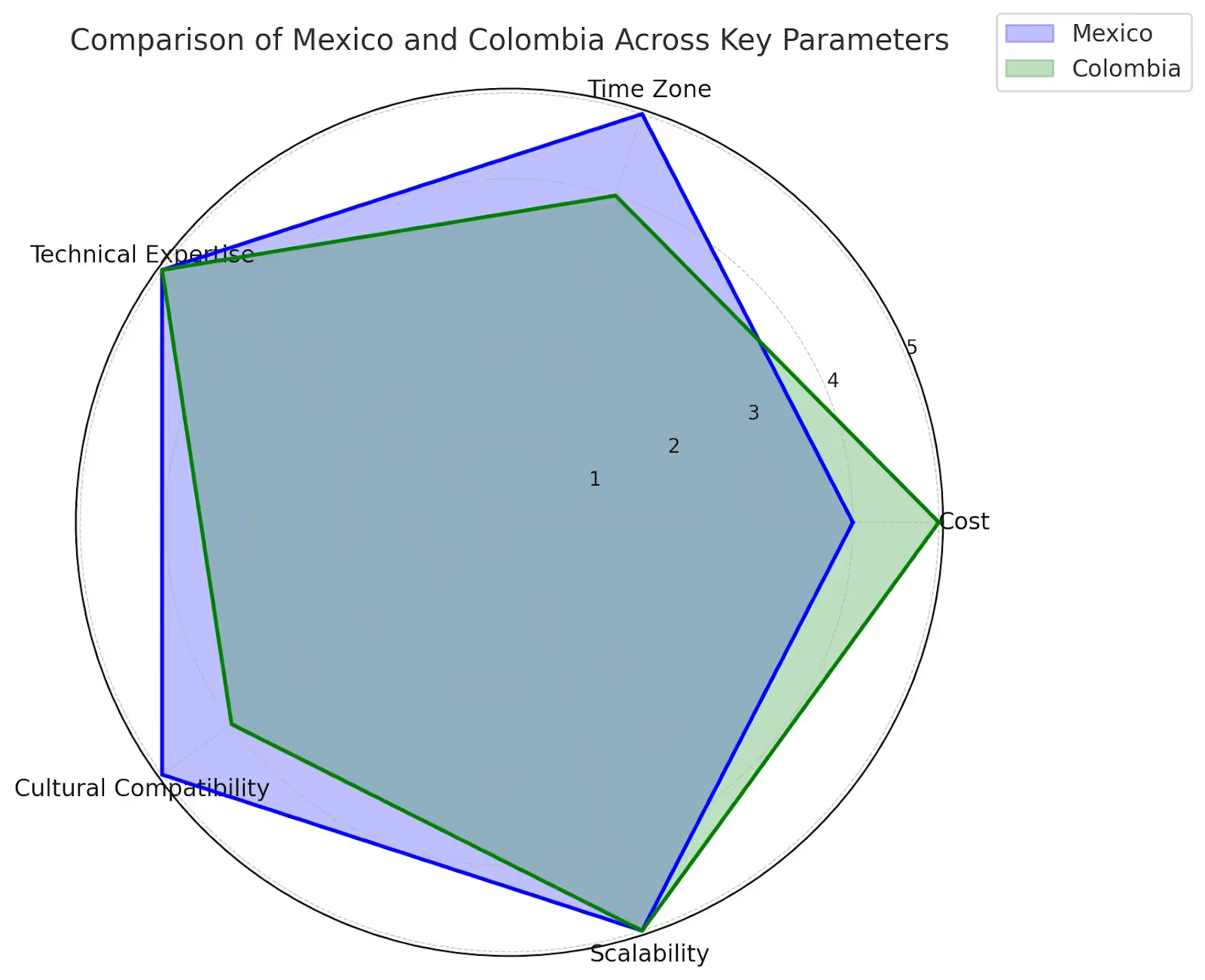
Both countries boast strong tech ecosystems, skilled talent, and a growing focus on data engineering expertise, but each brings distinct advantages. Outsourcing Data Engineers to either Mexico or Colombia can be a strategic move, depending on your business priorities.
Mexico stands out for its geographic proximity to the U.S., offering seamless time zone alignment and convenient travel options. Its mature tech sector, supported by trade agreements like the USMCA, ensures smoother business operations and reliable access to top talent. Mexico is home to leading companies in the Business Process Outsourcing sector, showcasing its capacity to manage complex operational and technical tasks at scale. Mexican data engineers excel in cloud infrastructure, ETL pipelines, and database management, making the country an excellent choice for outsourcing data engineers when projects require immediate collaboration and delivery.
Colombia, meanwhile, is quickly establishing itself as a cost-effective alternative with a thriving tech scene. Known for its innovative approach to big data and analytics, outsourcing data engineers from Colombia offers access to experts with expertise in tools such as Apache Spark, Hadoop, and machine learning frameworks. Colombia ranked first in the Offshore BPO Confidence Index, highlighting its strength in the global outsourcing landscape. The country's young workforce, competitive pricing, and increasing English proficiency make it an ideal destination for long-term partnerships focused on scalability.
Find out more about the top 5 benefits of outsourcing to Latin America.
Outsource data engineers for cost efficiency.
Monthly salaries for a remote Data Engineer hired from Colombia or Mexico by U.S. companies depend on factors such as experience, specific skills, and the cost of living in each country.
Colombia
- Junior Data Engineer: Between $3,125 and $5,625 USD/month.
- Mid-level Data Engineer: Between $5,625 and $7,500 USD/month.
- Senior Data Engineer: Between $7,500 and $10,000 USD/month.
Colombia's relatively low cost of living means that U.S. companies offer competitive salaries when they outsource data engineers without reaching U.S. levels.
Mexico
- Junior Data Engineer: Between $3,750 and $6,250 USD/month.
- Mid-level Data Engineer: Between $6,250 and $8,750 USD/month.
- Senior Data Engineer: Between $8,750 and $11,250 USD/month.
Salaries are slightly higher in Mexico than in Colombia due to greater geographic proximity and time sharing with various U.S. time zones, which facilitates collaboration when you outsource data engineers.
Time Zone Alignment and Communication
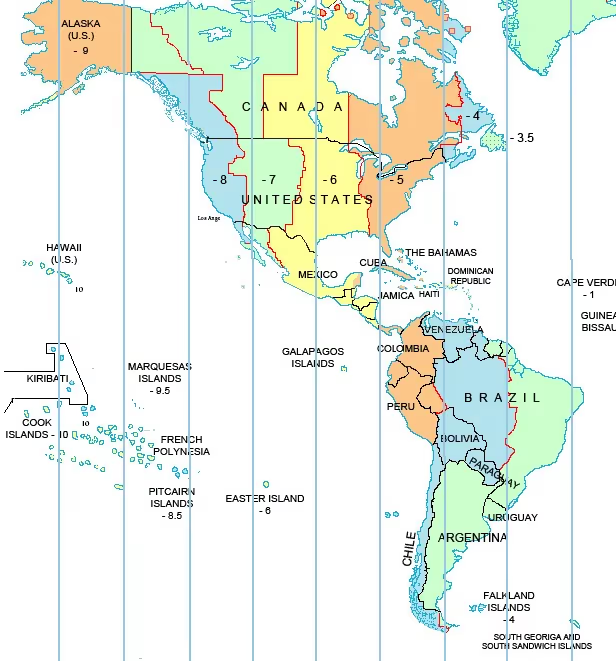
Time differences between Colombia, Mexico, and the United States vary depending on the specific time zone in the U.S. and daylight saving time. Here is the general breakdown:
Colombia and the U.S.
- Eastern Standard Time (EST): Colombia has the same time as the US Eastern Standard Time when there is no Daylight Saving Time (November to March). During Daylight Saving Time (March to November), Colombia is 1 hour behind EST.
- Central Standard Time (CST): Colombia is generally one hour ahead of US Central Standard Time, and during Daylight Saving Time, they are synchronized.
Mexico and USA
- Mexico Central Time (CDMX and most of the country):some text
- It is synchronized with CST in the U.S. for most of the year.
- During daylight saving time in the U.S., Mexico may fall 1 hour behind since its time change is different.
- Pacific Time: Synchronized with PST in the USA.
- Eastern Time: Synchronized with EST all year round, as it does not change for daylight saving time.
Technical Skills and Expertise
Mexico and Colombia are home to highly skilled tech professionals, making them ideal destinations for outsourcing data engineers. Both nations have made significant strides in STEM education, offering a steady pipeline of engineers trained in the latest technologies.
Mexico’s Expertise
In Mexico, a robust emphasis on cloud computing solutions has created a talent pool skilled in platforms like AWS, Azure, and Google Cloud Platform (GCP). Mexican data engineers are particularly strong in integrating cloud services with existing business infrastructure, optimizing workflows, and reducing operational costs. It makes Mexico a top choice for outsourcing data engineers specializing in cloud-based solutions. Many Mexican universities partner with global tech giants to certify students in cloud technologies, ensuring a workforce that stays current with industry demands.
Colombia’s Expertise
Colombia excels in big data and analytics, with engineers proficient in tools like Apache, Hadoop, Spark, and Kafka. These technologies are essential for handling large datasets, building real-time data pipelines, and developing machine learning applications. Outsourcing data engineers to Colombia provides access to professionals with hands-on experience in cutting-edge data solutions, thanks to an active startup scene and robust analytics training.
Learn more about outsourcing technical roles: Criteria for Choosing the Best Agency.
Cultural Compatibility: Successfully Outsourcing Data Engineers
Mexican teams are well-versed in U.S. business practices due to the countries' close geographic and economic ties. The long-standing trade relationships under NAFTA and now USMCA have fostered a deep understanding of American corporate culture.
- Familiar Work Practices: Mexican professionals are accustomed to U.S.-style workflows, including structured meetings, agile methodologies, and direct communication.
- Collaborative Approach: Mexicans value teamwork and open feedback, making them natural partners for iterative and agile-driven projects.
Colombians are celebrated for their adaptability, creativity, and resourcefulness—qualities that shine in dynamic and fast-changing projects. The country’s rising status as a global outsourcing hub has cultivated a workforce skilled at managing cross-cultural collaboration.
- Flexible Problem Solvers: Colombian teams excel at navigating challenges with innovative solutions, a significant advantage in complex data engineering tasks.
Customer-Centric Mindset: Colombian professionals emphasize client satisfaction and quickly adapt to North American businesses' unique needs and expectations.
Making the Right Choice for Your Business
Choosing between Mexico and Colombia depends on your specific needs:
Mexico is an excellent option if you focus on proximity and seamless time zone alignment. Its geographical closeness to the U.S. simplifies real-time collaboration and facilitates occasional in-person visits. Additionally, its familiarity with U.S. business practices and expertise in cloud platforms make Mexico a strong fit for teams requiring immediate, agile coordination when you outsource data engineers.
On the other hand, if cost efficiency for a larger team is a higher priority, Colombia might be the better choice. With slightly lower labor costs and a growing pool of skilled engineers specializing in big data and analytics, Colombia offers a scalable solution when you outsource data engineers for data-intensive projects. Its emphasis on creative problem-solving and adaptability is especially advantageous for companies tackling complex or innovative challenges.
At the end of the day, both countries provide exceptional value for companies looking to outsource data engineers.
FAQ
Can data engineering be outsourced?
Yes, data engineering can be effectively outsourced. Nearshoring to countries like Mexico and Colombia allows companies to access skilled talent for managing data pipelines, analytics, and infrastructure without the high costs of local hires.
Is there a demand for data engineers?
Absolutely! The demand for data engineers continues to grow as businesses rely more on big data and analytics for decision-making. Nearshoring offers a solution to meet this demand quickly.
How do I hire a data engineer?
Hiring nearshore data engineers typically means partnering with a trusted staffing firm. They handle the recruitment, screening, and onboarding, saving you time and resources.
Where can I find good data engineers?
Top locations include Mexico and Colombia, which are known for their strong technical education systems, competitive costs, and time zone compatibility with the U.S.
Conclusion
Outsourcing data engineers to Mexico or Colombia can be a transformative strategy for U.S. companies looking to scale operations, optimize costs, and access world-class technical expertise. Both countries offer strong advantages—Mexico's proximity, time zone alignment, and deep understanding of U.S. business culture- and Colombia's cost-efficiency, creativity, and specialized big data skills. Whether your priority is seamless collaboration on cloud infrastructure projects or building scalable data pipelines focusing on innovation, both countries offer exceptional value when you outsource data engineers.
To help you make the best decision, use the calculator below to estimate your costs and potential savings. For more details and personalized advice, please contact us.