
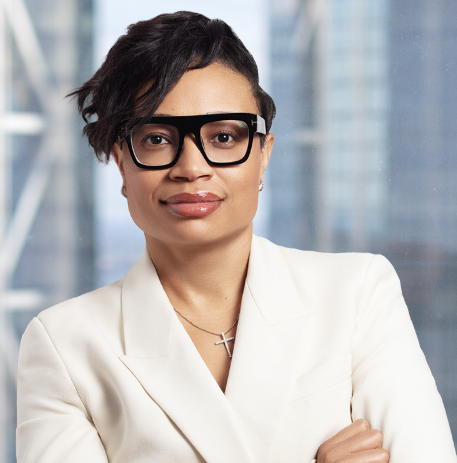
Tiffany Smith is a partner at WilmerHale and co-chair of the firm's Blockchain & Cryptocurrency Working Group. She has spent 18 years focused on financial services regulation and the past nine years working with blockchain and cryptocurrency companies.
Connect on LinkedIn ↗For years, one of the hardest questions for crypto companies in the United States was whether existing financial rules could realistically accommodate what they were building.
According to Tiffany Smith, Partner at WilmerHale and Co-Chair of the firm's Blockchain and Cryptocurrency Working Group, that conversation has changed significantly.
Smith has spent 18 years working in financial services regulation and roughly nine years advising blockchain and cryptocurrency companies. Her interest in the space grew from a question that has followed her throughout her legal career: what happens when old financial laws meet new technology?
Today, she sees an industry entering a different stage. Companies increasingly expect regulation. Regulators are engaging with businesses differently. And for founders, understanding the regulatory framework early can shape whether a business model works at all.
In a conversation with Tech Leaders, Smith shared what has changed, where companies should start with compliance, and why 20 minutes a day helped her build expertise at the intersection of law and blockchain.
Smith did not begin her career planning to become a crypto lawyer.
She studied finance in college and initially expected to work in the financial industry. She eventually chose law school, but her interest in finance remained. Instead of litigation, she gravitated toward financial regulation and the rules governing how banks, broker-dealers, and other institutions offer financial products and services.
The questions she found most interesting involved technology.
"I thought the most interesting issues when it came to financial institutions were the ones that talked about applying old laws or rules to new technology."
Blockchain became the next version of that problem.
When the technology began being used in securities markets, Smith wanted to understand it. What started as professional curiosity became a major part of her practice.
"Blockchain and crypto was sort of an evolution of just a new type of technology being used to offer financial services and products."
That background matters because many of the debates surrounding crypto regulation are ultimately questions about how new infrastructure fits into established financial systems.
Smith described the current regulatory environment as dramatically different from the one companies faced only a few years earlier.
She attributed much of that shift to changes in the US political and regulatory environment, including a more supportive stance toward crypto from the Trump administration and increased activity from federal agencies and lawmakers.
From Smith's perspective, the contrast is particularly visible in her interactions with the Securities and Exchange Commission.
"Three years ago, I was embroiled in an enforcement action where the SEC was suing my client for failing to register under various Exchange Act registration categories. And today, I talk to the SEC all the time about how my clients can register or be exempt from registration."
Her summary was straightforward:
"It's night and day. It's total 180 from how things were a couple of years ago."
The shift goes beyond regulators becoming more open to conversation. Smith also sees the industry itself becoming more willing to operate inside regulatory frameworks.
But those two developments have to happen together.
A company can want regulation and still struggle if regulators have not created a workable path to compliance. Smith said she has previously seen companies willing to register that could not do so because the necessary regulatory cooperation or framework was missing.
Today, she believes both sides are moving.
"You need agencies and rules and legislators and lawmakers to actually want to make rules that it's feasible for a crypto or blockchain company to comply with."
One of the clearest changes Smith sees is in how companies think about compliance.
Earlier in crypto's development, companies debated whether the industry should be regulated at all. Smith believes that question has largely faded.
"I think now we're at the place of where they understand that regulation is inevitable. In some respects it helps fuel growth."
For her, the difficult question now is what regulation should actually look like.
"I think it's no longer should crypto be regulated. The question is how."
That distinction matters. Rules designed for traditional financial markets may not always map cleanly onto blockchain-based businesses. Regulators and companies have to determine which risks deserve protection, what registration requirements make sense, and where exemptions may be necessary.
Smith also sees legal and compliance teams entering conversations earlier, particularly within traditional financial institutions exploring crypto.
Rather than appearing at the end of product development, compliance can become part of deciding what the company builds in the first place.
Smith's most practical advice for founders is to understand their regulatory exposure before building an entire company around assumptions that may later prove wrong.
Her starting point is simple.
"If you touch someone else's money, other people's money, you're going to be regulated."
That is not a complete legal test, but it is a useful signal for founders deciding when they need specialized advice.
Smith recommends finding an advisor who can identify which regulations may apply to the business early in its development.
"What you don't want to do is build an entire business, think that you don't need to be regulated and sort of build on this false premise."
Discovering years later that a company needs a license, registration, exemption, or different operating model can do more than create additional legal work. It can affect the viability of the business itself.
"You might have made different changes."
Her advice also extends beyond hiring legal counsel. Founders operating in crypto should pay attention to legislative developments, even if following Congress is far outside their normal responsibilities.
A business that currently falls primarily under state regulation, for example, could eventually become subject to a new federal framework.
For early-stage companies with fewer resources, Smith suggested making use of incubators, industry programs, professional communities, and personal networks to better understand the regulatory environment.
"Use your network, use your community [...] to get as much information as possible to figure out what your regulatory landscape's going to look like."
Smith's career offers another lesson that extends beyond crypto.
About eight or nine years ago, she decided blockchain had the potential to become transformational. She already understood financial regulation, but she did not yet have the technical knowledge she wanted.
So she created a simple habit.
"I decided that I was going to take 20 minutes a day and learn the technology and get up to speed."
Twenty minutes does not sound like much. Repeated over years, it gave her something relatively uncommon: deep regulatory experience combined with an understanding of the underlying technology.
"20 minutes a day over the course of years resulted in me knowing the technology very well."
That combination opened doors. Smith has testified before Congress and has been invited to speak at the SEC and the Kansas City Fed.
She traces those opportunities back to a decision made years before the market reached its current level of attention.
The broader lesson is one she now gives to people trying to build careers in fintech, crypto, law, or financial regulation.
"If you're interested in something, invest in yourself."
She encourages professionals to actively develop the knowledge and relationships they need instead of waiting for the right assignment or opportunity to appear.
"Don't sort of wait for the opportunity to come to you [...] take active steps."
Smith has spent much of her career in environments where men still make up a significant share of leadership, from large law firms and financial services to crypto.
Her advice to women entering those industries starts with finding community.
"There are always going to be organizations that are sort of there to support and help women who are in various industries, particularly that are male-dominated, to sort of find their community."
At the same time, she does not see the industry's gender imbalance as a reason to question whether women can succeed in it.
Her perspective focuses instead on what happens when someone enters the room, develops expertise, and remains there.
"When I'm in the room and another woman comes in the room, they at least see one other person."
For Smith, succeeding in the industry can create opportunities that extend beyond an individual career.
"Recognize that you're creating opportunities for people behind you."
Crypto regulation is still evolving, but Smith's experience suggests that companies should treat regulatory thinking as part of business design rather than an issue to solve after growth.
The most useful question for founders may no longer be whether regulation is coming. It is what regulation applies, how the business can operate within it, and whether today's product decisions will still make sense under tomorrow's framework.
Smith's own career offers a parallel lesson.
When she believed blockchain could become important, she did not wait for the industry to validate the opportunity. She spent 20 minutes a day learning it.
Years later, the combination of technical understanding and legal expertise became one of the foundations of her practice.
Her advice is difficult to improve on:
"Investing in themselves."
For founders building in a regulated industry and professionals trying to find their place within one, preparation still creates options before opportunity arrives.